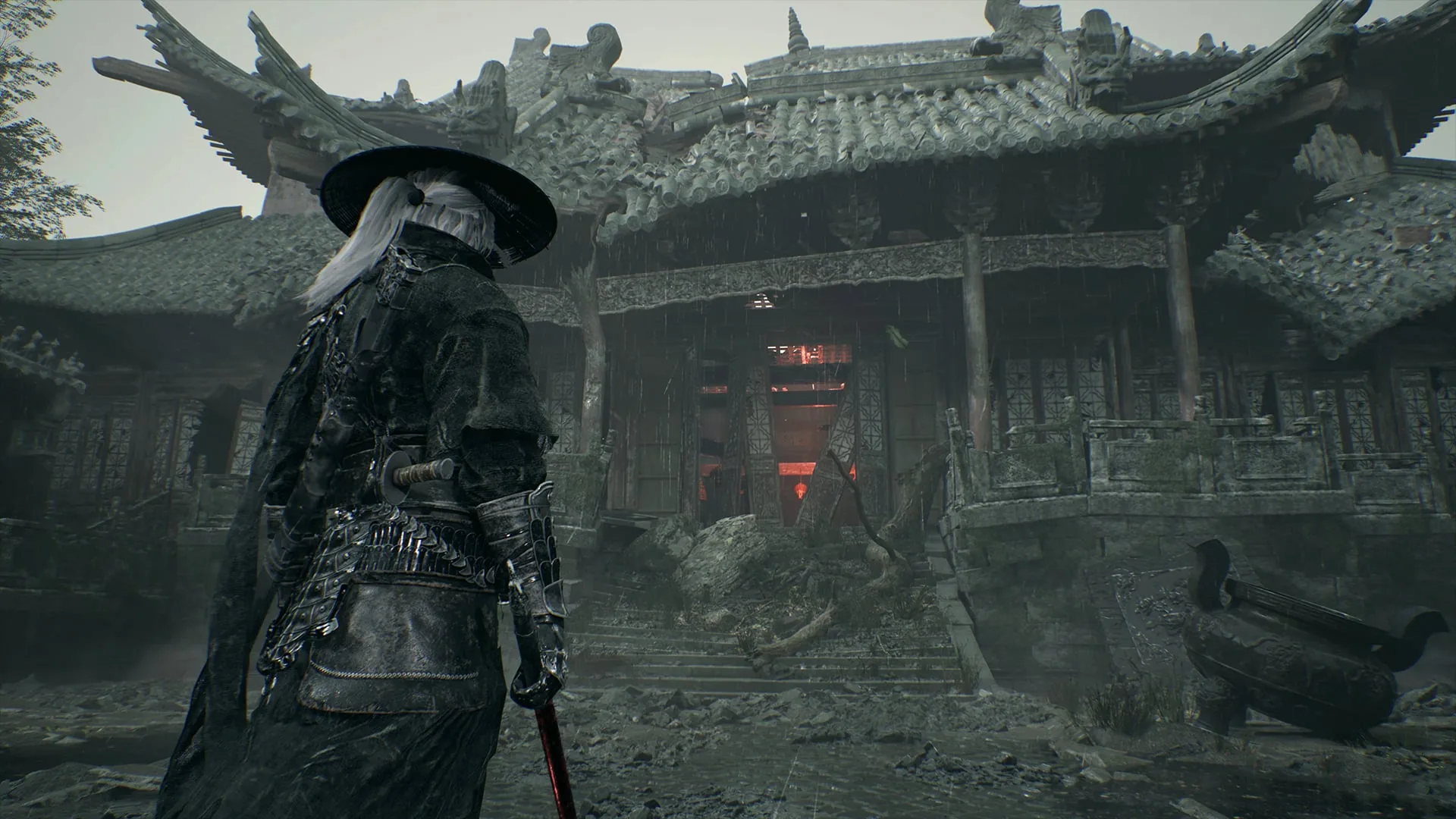
Phantom Blade Zero’s first ten hours are the part players argue about most. In our scan of 131,414 Steam reviews from the launch window, 1,728 mention onboarding, the opening, or the refund window; 560 of those are negative — a 32.4% negative share, with a median playtime of 2.5 hours. That does not prove the game is bad. It proves the opening is where expectations and reality collide hardest.
This is not a “ten tips” page. It is a roadmap for deciding whether to keep going, what to rush, and what you can safely leave for later.
The refund-window problem
Phantom Blade Zero has no public demo. Press played a roughly six-hour build, but there is no consumer trial, so the first two hours are also the buying decision.
That window is unusually hostile here. The first launch compiles shaders, and the wait can run from roughly 8 minutes on a fast CPU to 20–55 minutes on older hardware. Players report hitting the two-hour mark before leaving the opening area, and the compile time counts toward playtime. One review describes waiting 30–40 minutes, then realising half the refund window was already gone.
The 1,728 mentions and 32.4% negative share are context, not a verdict. The reviews that bounce early tend to cite the same things: a slow prologue, a combat system that looks harder than it feels, and performance friction. The reviews that stay tend to cite the weapon variety, bosses, and the point where the parry loop clicks. Your job in the first ten hours is to find out which group you are in without wasting a region’s worth of time.
What the first 10 hours actually are
The times below are route estimates from the walkthrough, not a stopwatch. Chapter numbering varies between the in-game table and guide sources, so the region name is the reliable unit.
| Hours | Content | What it feels like |
|---|---|---|
| 0–1 | Prologue — dojo duel, combat tutorial, cart chase, The Hunt | Linear and story-heavy; the tutorial is short and does not explain the colour language well |
| 1–5 | Weeping Creek Valley — Forge, Jagged Steel, Peng Meng, the Dread Axe, The Hunt | First real exploration; still narrow; this is where upgrades and the map open |
| 5–9 | Crimson Forest — Jing Ye, Hua, Bai Chilian, the first hard wall | Combat variety arrives; the parry window starts mattering; first serious missables |
| 9–10 | Village of Lu — ribbons, Wild Oriole, the Pangzhen transition | Build identity starts to form; the next region is much larger |
The opening is not a disguised tutorial for a different game. What you see in the prologue — animation-committed attacks, auto-derived follow-ups, a camera that participates in combat — is the game. The later regions add weapons, bosses, and systems, not a new control scheme. If the core loop in the prologue actively repels you, more hours will not fix that.
What to rush
Rush the parts that unlock systems. Do not rush the parts that close permanently.
- Finish the prologue tutorials without restarting cutscenes. The dojo section teaches the basics, but the colour language is better learned in the valley.
- Reach Forge and the first bells. Forge unlocks weapon upgrades; bells unlock fast travel, the local map, training, and supplies. Ring every bell you pass.
- Take Sanguine to Lv10. That unlocks Phantom Execution for every one-handed weapon, permanently. It is the single most efficient early spend.
- Get Jagged Steel and the Dread Axe. Jagged Steel is a bleed primary from the valley; the Dread Axe is a Destructive Phantom Edge from Peng Meng that breaks chains and opens routes.
- Complete A Severed Mindseal before leaving the valley. The first stone hand-in closes when you leave. This is a trophy and accessory chain, not optional flavour.
- Complete Apprentice Healer before Jing Ye. It rewards the Medicine Case, which increases healing. A stronger gourd saves more runs than a +2 weapon.
- Hand in the Flesh Lily before Bai Chilian. The flower hand-in closes at that boss. The same window applies to A Healer’s Mercy, Honor Among Thieves, Purge the Sect, Festering Secret, and accepting Secrets of the Baishan Sect.
- Report The Journey Home and speak to Young Master Lan before the Pangzhen transition. Both are easy to walk past and both close.
The counterintuitive part: do not rush past exploration entirely. Enemies do not respawn, Remnant Dust is finite, and the region’s upgrade materials are the power curve. Sprinting the critical path leaves you under-levelled for the boss that gates the next region.
Early weapons worth picking up
Only the confirmed early picks are listed here. There are more weapons later; do not try to level all of these.
| Weapon | Where | Why it matters |
|---|---|---|
| Sanguine | Starting sword, Chapter 1 | Fast one-handed; Lv10 unlocks Phantom Execution for the whole one-handed class |
| Jagged Steel | Weeping Creek Valley — riverbed boss | Bleed/Blood Loss; generalist that stays relevant; temper later for bleed through block |
| Dread Axe | Peng Meng, the Axemaster | A Phantom Edge, not a primary; breaks chains and several environmental locks |
| Sanguine Twin | Weeping Creek Valley — rack below Yu’Er | Fast dual-wield; Lv10 unlocks Shadow Execution for the dual-wield class |
| Sanguine Reach | Weeping Creek Valley — rack behind Forge | Wide two-handed sweeps; Lv10 unlocks Fatal Execution for the two-handed class |
| Feather Bow | Purge the Sect Tale, Weeping Creek Valley | Ranged opener with bonus damage against full-HP enemies; missable before Bai Chilian |
| Scarlet Wraithblade | Hua, the Deadly Betrothed (optional) | Two-handed bleed weapon with Red Spider Lilies; the Flesh Lily quest is the real reason to fight her |
| Wild Oriole Sword | Village of Lu — dock after Mu Xiaokui | Strong sword-wave weapon; permanently missable if you pass the window |
Upgrades to prioritise
The early upgrade economy is simple: one main weapon, then the stats that keep you alive.
- One primary to Lv10 first. Sanguine is the safest because its class execution unlocks for every one-handed weapon. If you prefer dual blades, Sanguine Twin; if you prefer two-handed, Sanguine Reach.
- Keen Edge — attack and Guard Break damage. The default damage stat.
- Fortified Body — max HP. More valuable than a few points of attack while you are learning.
- Boundless Capacity — an extra accessory slot. Accessories are the armour system in this game.
- Healing Art — an extra Medicine use. It costs 5,000 Dust and pays for itself.
- Medicine Case — from Apprentice Healer; stronger heals. Medicine upgrades proper unlock later with Xie Xiaorong at the Green Serpent House in Pangzhen.
- Reflex Device — +15% parry and Perfect Dodge window. If parry timing is the wall, this is the blunt fix.
Do not Soul Temper early. Soul Temper is permanent, expensive, and cannot be reverted. It is a commitment for a weapon you intend to keep, not a trial run. Weapon upgrades below Lv10 are refundable; Soul Temper is not.
Do not hoard Remnant Dust. Enemies do not respawn. Dust sitting in your inventory is power you have not equipped. Spend on the compounding stats first, then on weapon levels.
Settings to change before hour two
- Difficulty: Wayfarer if timed defence is unfamiliar, Pathbreaker if you have played character-action games. The first three modes can be changed outside combat with no penalty, so a boss wall is not a reason to restart. Boss HP is identical across the first three modes; you are only changing incoming damage and the parry window.
- Motion blur: off. It smears fast camera pans and makes group fights harder to read.
- Camera shake: off or low. It reduces nausea and visual noise; it does not fix target selection.
- Camera sensitivity: raise it enough to flick to an off-screen enemy, lower it if you overshoot. Test in a cleared area.
- Axis inversion and vibration: personal preference. Turn vibration off if it distracts during combat.
- Remap: PC Interact/Talk was added in patch 1.0302256. Remapping is partial; players report some actions cannot be changed.
- Subtitles: two font sizes are confirmed. Use them; the story is delivered in fragments and the combat barks are easy to miss.
On PC, start from High, use DLSS/FSR/XeSS on Quality, turn ray tracing off, turn High-Quality Hair off, and set Environment Detail to Medium. Let the shader compile finish. If you are on NVIDIA 621.01 and crashing, clean-install 617.42. The full baseline is in the PC performance guide.
For the camera itself, there is no target-priority setting to change. The workable approach is spacing, free camera, and target order, covered in the camera and lock-on guide.
When the game opens up
The honest version: it opens up in stages, and not all of them are upward.
- Hour 3–4, after Forge and your first weapon levels. You have a real loop: light attacks build Sha-Chi, heavies spend it, swap-attacks refill it, and a Lv10 class execution gives you a finisher.
- Crimson Forest. This is where many players say the combat clicks. You have a second weapon, a real boss wall in Bai Chilian, and enough tools to experiment. A common player description is “slow prologue and first chapter, better from the second region, fully fun by the third.” Treat that as a player report, not a guarantee.
- Village of Lu and Pangzhen. The build variety improves, but the group fights get bigger and the camera problem gets worse. The curve is not a smooth “it gets good” line; it is a series of spikes.
If you are waiting for the game to become a different genre — a precise Sekiro-style duel system with full camera control — it will not. The animation commitment, the auto-derived follow-ups, and the lock-on behaviour are the design, not a temporary opening state.
What is safe to defer — and what is not
“Safe to skip” here means safe to defer, not safe to forget. Most regions reopen after the credits for cleanup, but quests reset in New Game Plus.
Safe to defer for now
- The Aberrant Three-Faced Puppet. It is overtuned when you first find it; return after Chapter 3.
- Yucong. It needs Triple Threat, the Aberrant Puppet kill, the Mirage chapter, and the Blazing Edge equipped. Start Triple Threat, but do the fight later.
- The five Banyan trees. They are post-game rematch content; do them after the credits.
- Optional superbosses such as the Blizzard Blademaster and Mo Yuan. They are late-game fights, not early power spikes.
- Non-missable collectibles. Memory Flowers, accessories, and Lost Treasures can be swept in post-game free roam. Memory Flowers are still worth picking up as you pass because they raise max HP.
- Cosmetic outfits and lore entries. They do not affect the first ten hours.
Not safe to skip
- A Severed Mindseal — first stone before leaving Weeping Creek Valley.
- Apprentice Healer — before Jing Ye.
- Purge the Sect and Festering Secret — before Bai Chilian.
- Flesh Lily hand-in, A Healer’s Mercy, and Honor Among Thieves — before Bai Chilian.
- Secrets of the Baishan Sect — accept before Bai Chilian; inspect Bi Taotao before Yubi.
- The Journey Home report and the first Young Master Lan conversation — before the Pangzhen transition.
- Young Mistress — all five ribbons before Mu Xiaokui.
- Every pre-Mirage purple Mystery — before the Green Serpent House door.
The missables checklist is the page to keep open. It is more valuable than any build guide in the first ten hours.
The 10-hour checklist
- Update the game, launch it, and let the shader compile finish. Reboot.
- Pick a difficulty. Wayfarer if unsure; change it outside combat later if needed.
- Turn motion blur off, set camera shake low or off, and adjust sensitivity.
- Reach Forge and ring every bell in Weeping Creek Valley.
- Defeat Jagged Steel and take the Jagged Steel weapon.
- Defeat Peng Meng and equip the Dread Axe for chains and shortcuts.
- Take Sanguine to Lv10 for Phantom Execution.
- Buy Keen Edge, Fortified Body, and Boundless Capacity as Dust allows.
- Complete A Severed Mindseal before leaving the valley.
- Complete Apprentice Healer before Jing Ye.
- Hand in the Flesh Lily before Bai Chilian.
- Finish the other pre-Bai Chilian Tales: A Healer’s Mercy, Honor Among Thieves, Purge the Sect, Festering Secret, and accepting Secrets of the Baishan Sect.
- Collect the six Inanis Memory Flowers before Bai Chilian if you want the Chord’s help in phase two.
- Take Lóng Pillar 2 in Crimson Forest.
- Report The Journey Home and speak to Young Master Lan before the Pangzhen transition.
- Collect all five ribbons before Mu Xiaokui.
- Decide whether you are staying. If yes, continue with the beginner guide; if no, stop here rather than forcing a region you are not enjoying.
Don’t force it if…
This section exists because the reviews are full of people who spent ten hours waiting for a game that was never going to arrive.
- You want full manual camera and lock-on control. The game does not offer a target-priority setting, and the lock can pick barrels. The workarounds help, but they do not give you the camera authority of a dedicated action game.
- You dislike animation-committed attacks and auto-derived follow-ups. This is the core of the combat, not a tutorial artefact. If it feels like the game is playing itself, more weapons will not change that feeling.
- You need a polished first hour. The opening is the roughest part: a linear prologue, a short tutorial, and a valley that withholds the full toolkit for several hours.
- You are on Steam Deck. The port averaged 23–27 FPS at the lowest settings, dipped near 10 FPS, and was rated 1/5 by Steam Deck HQ. The November patch did not change that verdict. No settings combination fixes it.
- You need colourblind or high-contrast gameplay options. No such mode is confirmed. The confirmed accessibility tools are difficulty, subtitles, control reminders, remapping, motion-blur and camera-shake sliders, and text-size options.
- You are past the refund window and still not having fun. Drop the difficulty, change to a wide-clear weapon, or shelve it. The game is not going to become a different game at hour 12.
- You are only playing for the 100% and dreading it. The platinum does not require every collectible or New Game Plus. A completionist run is 50–55 hours; do not commit to that before you know you like the combat.
If you are staying
Read the beginner guide for the twenty mechanical tips, the combat system explained for the Sha-Chi and parry loop, and the difficulty guide before you commit to Hellwalker or 66 Days. For the route, use the walkthrough and the missables checklist. If the camera is the thing making you miserable, read the camera and lock-on guide before you decide the game is unplayable.
Sources & confidence
The onboarding counts come from the review scan in research/reviews/pain-points.json: 131,414 reviews, 1,728 onboarding/refund mentions, 560 negative (32.4%), median 2.5 hours. These are keyword-bucket mentions, not a poll, and the buckets overlap. The region times are estimates from the walkthrough, not a timed playthrough. The “it opens up in Crimson Forest” claim is a common player report, not a universal turning point; the review evidence includes players who clicked earlier and players who bounced off the later group fights. Weapon locations, upgrade milestones, and missable deadlines are cross-checked against the beginner guide, PowerPyx, PC Gamer, and the research files. The Steam Deck figures are Steam Deck HQ’s late-October and November 6 tests, not an S-GAME benchmark.
Sources & further reading
- Steam store page — Valve
- Phantom Blade Zero review — IGN
- Trophy guide and roadmap — PowerPyx
- Phantom Blade Zero tips — PC Gamer
- Steam review — SNAKEA3ER (refund window and shader wait) — Steam Community
We link to the primary source for every hard number. If a source conflicts, we say so in the text.
By the PBZ Guide Team · Reviewed by the editorial desk Written in English from primary sources and cross-checked play routes. Spot an error? Tell us and we will update the guide. We link to the primary source for every hard number. If a source conflicts, we say so in the text.